October 31, 2026
Why Interlocking Driveways Markham Homeowners Rely On for Lasting Curb Appeal
By @getinterlockingdrivewaysedge
When I first moved to Markham over a decade ago, I remember pulling into a friend's driveway and noticing how the concrete had cracked and settled unevenly after just a few winters. It wasn't an eyesore exactly, but it had that tired look that says "this surface has seen better days." A few houses down, another driveway made of interlocking pavers caught my eye. The pattern was clean, the colours still rich, and even after several freeze-thaw cycles, it sat level and true. That contrast stayed with me, and it's shaped how I think about hardscaping ever since.
Interlocking driveways are not a new trend in the GTA, but they have become the standard for homeowners who value both durability and design. The decision to install one, however, involves more than picking a pretty pattern from a catalogue. There is real craft in the base preparation, the edge restraint, and the choice of paver type. And in a climate like ours, where the ground heaves and thaws every spring, getting those details right makes all the difference.
What Makes Interlocking Driveways Markham a Smart Investment
Let's talk about freeze-thaw cycles. In Markham, we get them hard and often. Water seeps into cracks, freezes, expands, and then thaws. On a poured concrete driveway, that cycle eventually causes cracking and spalling. On asphalt, it leads to potholes and alligator cracking. Interlocking pavers handle this differently. The joints between the pavers allow for natural expansion and contraction. When the ground shifts, the pavers move slightly with it rather than cracking apart. A well-laid interlocking driveway can last twenty years or more with proper maintenance, and individual pavers can be replaced if damaged. That modularity is a huge advantage over monolithic surfaces.
Another factor is drainage. A properly installed interlocking driveway has a permeable base that allows water to drain through the joints and into the ground below. This reduces standing water, ice patches in winter, and the runoff that can flood your lawn or your neighbour's basement. In a region that gets as much rain and snow as we do, that's not a small thing.
The Craft Behind the Surface: What a Good Installation Looks Like
I've watched crews lay interlocking driveways in Markham, and the difference between a job that holds up and one that sinks is almost always in the base. A proper installation starts with excavating down to the right depth, usually around eight to twelve inches depending on the soil type and expected load. Then comes a layer of crushed stone, compacted in lifts. Then a layer of coarse sand or stone dust, screeded flat. The pavers go on top, and after they're set, polymeric sand is swept into the joints and activated with water. That sand locks the pavers together and prevents weed growth and ant infiltration.
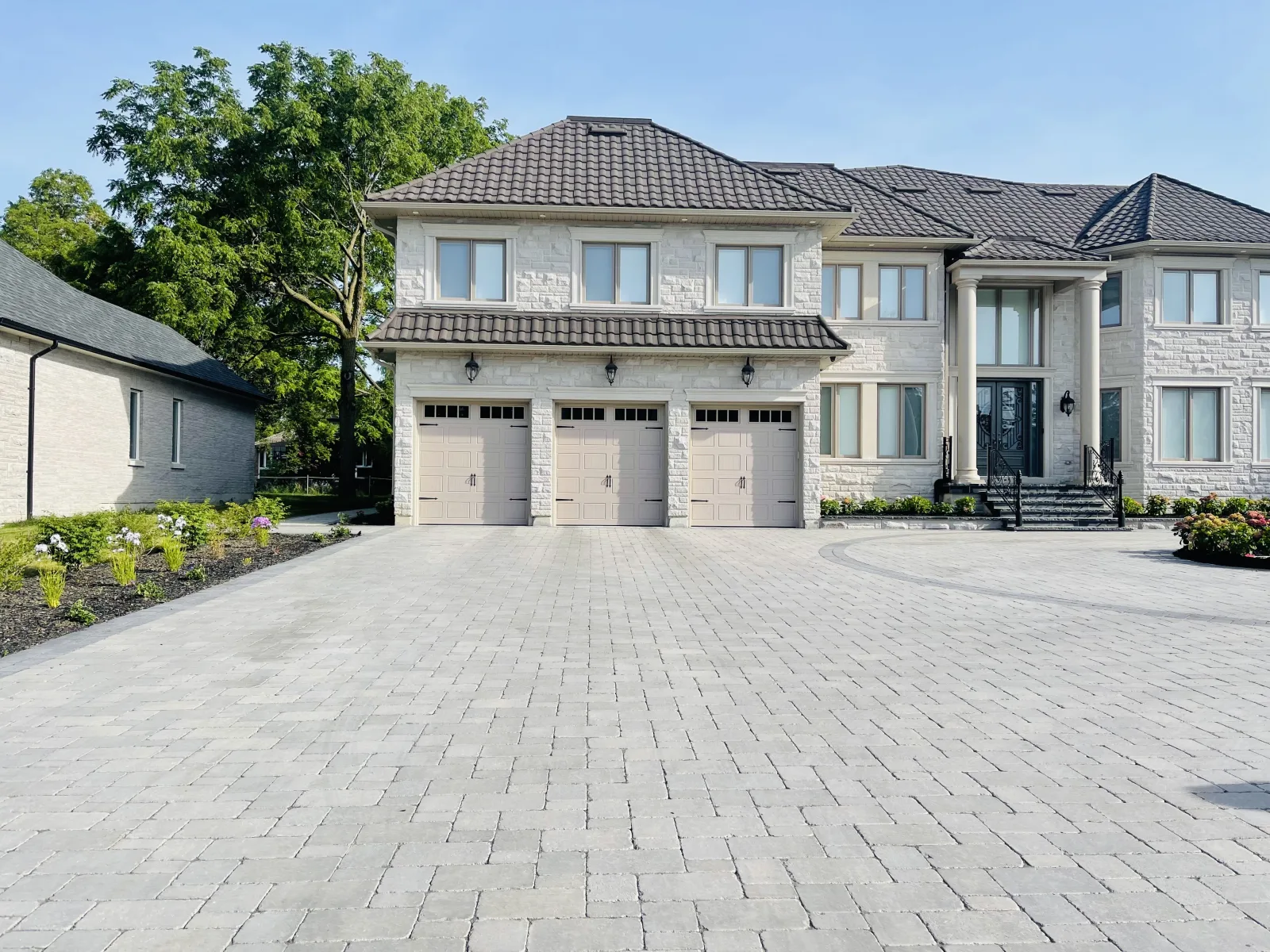
Skipping any of those steps, or rushing the compaction, leads to settling. I've seen driveways where the pavers have sunk two inches in the first year because the base wasn't compacted properly. That's not a materials problem; it's a workmanship problem. And it's why choosing an experienced installer matters more than picking the cheapest quote.
The type of paver you choose also affects longevity. Concrete pavers are the most common and come in a huge range of colours and shapes. Clay brick pavers offer a more traditional look and tend to hold their colour longer, but they're more expensive and can be harder to source. Stone pavers, like granite or limestone, are extremely durable but also heavy and expensive. For most Markham homeowners, a high-quality concrete paver with a chamfered edge offers the best balance of cost, durability, and appearance.
Design Choices That Go Beyond the Basics
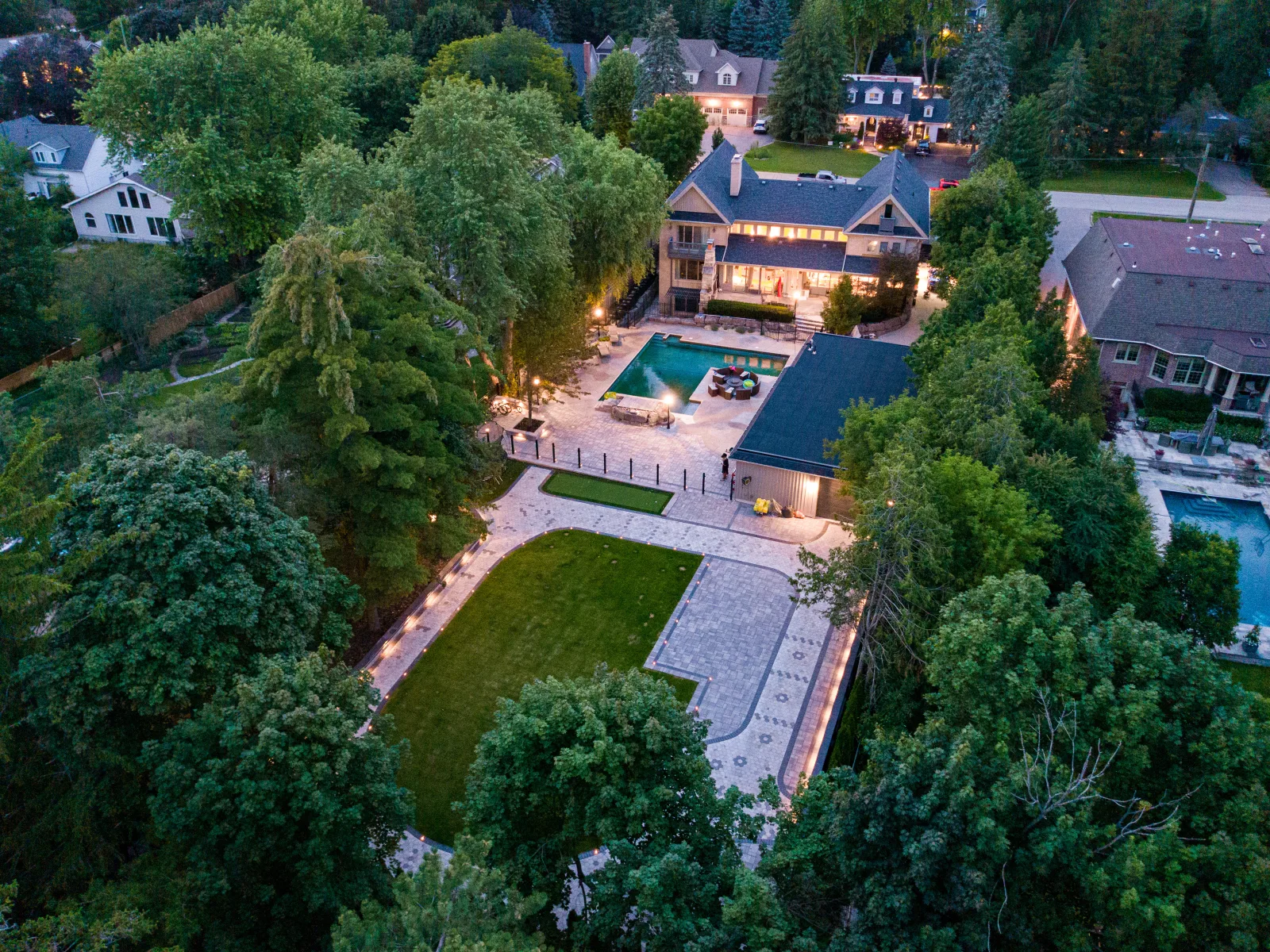
One of the things I appreciate about interlocking driveways is the design flexibility. You can create borders, herringbone patterns, basket weave, or running bond. You can mix colours to define the edges or create a central ribbon. You can even incorporate a decorative apron at the street or a circular turn-around at the top of the driveway. These choices affect not just the look but also the structural performance. For example, a herringbone pattern distributes load more evenly than a straight lay, making it better for heavy vehicles.
But design isn't just about aesthetics. It's also about scale. A large driveway with a simple pattern can feel monotonous. Adding a border or a change in colour at the parking area breaks up the visual mass and gives the eye a place to rest. Conversely, a small driveway with too many pattern changes can feel busy and chaotic. The best designs, in my experience, are the ones that respect the proportions of the house and the surrounding landscape.
Maintenance: What You Need to Know
Interlocking driveways are low maintenance, but they are not zero maintenance. The main tasks are sweeping and reapplying polymeric sand every few years, and occasionally power washing to remove dirt and moss. In the winter, you should use a plastic shovel rather than a metal one to avoid chipping the pavers. Ice melt is fine, but avoid products with calcium chloride if you have concrete pavers, as it can cause surface spalling over time. Sand is a better choice for traction because it doesn't damage the pavers and it can be swept back into the joints.
Weeds can be a nuisance if the polymeric sand wears away. A simple spot treatment with boiling water or a vinegar solution usually does the trick. Avoid harsh herbicides near the driveway because they can stain the pavers and harm nearby plants.
I've also seen homeowners seal their interlocking driveways with a penetrating sealer to protect against stains and UV fading. That's optional, but it can extend the life of the colour, especially on lighter pavers. Just make sure the sealer is breathable, otherwise trapped moisture can cause the paver surface to peel.
Cost vs. Value: Making the Numbers Work
There's no getting around it: interlocking driveways cost more upfront than asphalt or plain concrete. A typical installation in Markham ranges from $15 to $25 per square foot installed, depending on the paver quality, base conditions, and complexity of the pattern. Asphalt might cost half that, and poured concrete falls somewhere in between. But the long-term value changes the equation. An asphalt driveway needs to be sealcoated every two to three years and may need resurfacing after ten. A concrete driveway will crack and may need patching or replacement within fifteen years. An interlocking driveway, properly installed, can last twenty-five years with minimal maintenance. When you factor in the replacement costs, interlocking often comes out ahead.
There is also the resale value. Real estate agents in Markham consistently tell me that a well-maintained interlocking driveway is a strong selling point. It signals to buyers that the property has been cared for and that the big-ticket items are not going to be a problem. In a competitive market, that can make the difference between a quick sale and a lingering listing.
Choosing the Right Installer
I've seen too many homeowners pick a contractor based solely on price, only to end up with a driveway that settles, pools water, or loses its colour within a year. A good installer will show you examples of their work, provide references, and walk you through their process. They should talk about base preparation, drainage, and edge restraints. They should also be willing to discuss the limitations of different paver types and patterns, not just sell you on the most expensive option.
Connect with us on Facebook.
Ask about their warranty. A reputable installer will stand behind their work for at least two to three years. Some offer up to five. That's a sign they trust their base prep and installation methods. Also ask about the specific challenges of your property. If your driveway slopes toward the house, you need a drainage solution beyond just the paver joints. If you have heavy clay soil, the base depth and material selection might be different than on sandy loam.
For homeowners exploring interlocking driveways Markham has to offer, the key is to think long term. This is not a project you want to redo in five years. Investing in quality materials and skilled labour up front saves money and frustration down the road.
One more thing: check with your municipality about permits and setback requirements. In Markham, driveway width and location are regulated, and you may need a permit if you're expanding or changing the grade. A good installer will handle that paperwork as part of the project, but it's worth confirming before you sign a contract.
At the end of the day, a driveway is the first thing people see when they pull up to your home. It's also one of the most heavily used surfaces on your property. Getting it right matters. For those in the area, Jayden's Landscaping Markham, located at 5357 19th Ave, Markham, ON L3P 3J3, Canada, has been installing interlocking driveways since 2014, and you can reach them at +1 647-621-4219 for a free quote.
❧